RxHCC is how CMS pays for prescription drug risk. It's updated every year, published in government-document form, and worth millions per plan. This site makes it usable.
Every Medicare Advantage drug plan gets paid a risk score for each member. That score — the RxHCC score — comes from diagnoses, demographics, and the CY model coefficients CMS publishes annually.
Higher documented acuity, higher score, higher Direct Subsidy payment. Moving a member from 1.0 to 1.16 is worth roughly $47 PMPM — about $568 PMPY. At 2.0, the same 16% gap is worth nearly double.
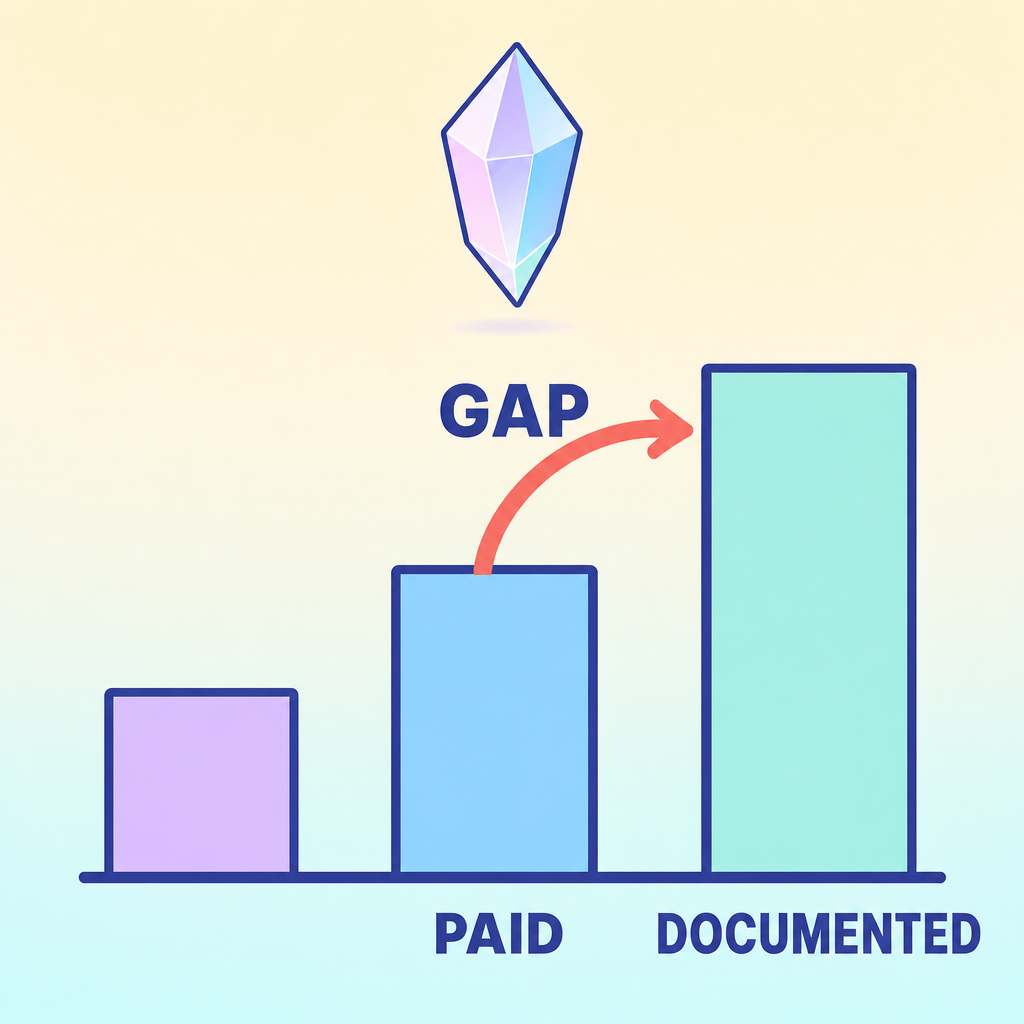
CMS publishes the model software and factors every year. What it doesn't publish is a way for a normal human to use them. That's the gap this site fills.
Read: How Part D risk adjustment works →
The codes are published. The coefficients are public. The money already exists — it's allocated, actuarially justified, and waiting.
The hard part is aligning with providers to compliantly code: getting the diagnoses that already exist in the clinical record documented, coded, and submitted — with evidence that survives a RADV audit.
A typical plan's pharmacy claims concentrate in a few hundred prescribers. That's not an enterprise transformation. That's a focused, provider-aligned workflow.
How plans operationalize this →Raise scores without evidence and CMS calls it upcoding. Raise them with documentation and it's revenue you already earned.
Every legitimate RxHCC improvement traces back to clinical evidence in the patient record — a full audit trail, RADV-ready by default. Greed and fear have the same answer.
Read: RxHCC audit readiness →
Surface explainers up front. CMS citations, model mechanics, and whitepaper-depth analysis one click in. All free, all indexable, all yours.
RxHCC scores, Direct Subsidy mechanics, and why diagnoses become dollars.
The prescription drug risk-adjustment model CMS uses to pay Part D plans. Diagnoses map to RxHCC condition categories, categories carry coefficients, hierarchies dedupe them, and the sum is a member's Rx risk score — which scales the Direct Subsidy.
CMS finalized substantial updates, including separate model segments for MA-PD versus standalone PDP beneficiaries, refreshed coefficients, and methodological changes. Plans need to re-model revenue exposure against the new factors.
No. RxHCC.com is a reference layer — explainers, model documentation, and analysis. The point is understanding, not tooling.
Raising scores without clinical evidence is upcoding. Documenting acuity that already exists in the record — with a defensible evidence trail — is capturing revenue the plan already earned. The difference is documentation.
The team behind this reference layer. CuraFi works with MA-PD plans, ACOs, and provider networks on compliant risk adjustment, utilization management, and prior authorization — and keeps this site free.
One door: talk to CuraFi. Consulting, analytics, or partnership with our ACO network to improve coding, risk adjustment, and compliance.


Everything CMS publishes, translated into plain language and kept current. No login, no paywall, no sales gate on the reference layer.

Plans and providers reading from the same page. Risk adjustment only works when the people coding and the people paid share an understanding.

Every claim traces to clinical evidence. If it wouldn't survive a RADV audit, it doesn't belong in the submission.
The 2027 RxHCC model is final — separate segments for MA-PD and standalone PDP, refreshed coefficients, new methodology. Your 2026 baseline is already out of date.
Two operating models for the same compliant revenue engine — and when each wins.
The redesign moved real money onto plan balance sheets. The math, plainly.
72 hours, no exceptions. What the rule demands from your UM operation.
Ten minutes, plain language, zero jargon. What RxHCC is and why it pays.
Start reading →What the finalized model changes, who it hits, and what to re-model first.
See the changes →We work with plans and provider networks to capture legitimate, documented RxHCC revenue — and survive the audit afterward. Pick a lane, or just start the conversation.